

Exclusive: An Interview with David Henderson, Director of Industrial Segment, Micron Technology
7 min read.

David Henderson is Director of the Industrial Segment at Micron Technology Inc. (Nasdaq: MU). He has been at Micron since 2010. Before that, he has had experience at Intel, STMicroelectronics, and Numonyx. He has spent much of his career in the memory semiconductor industry.
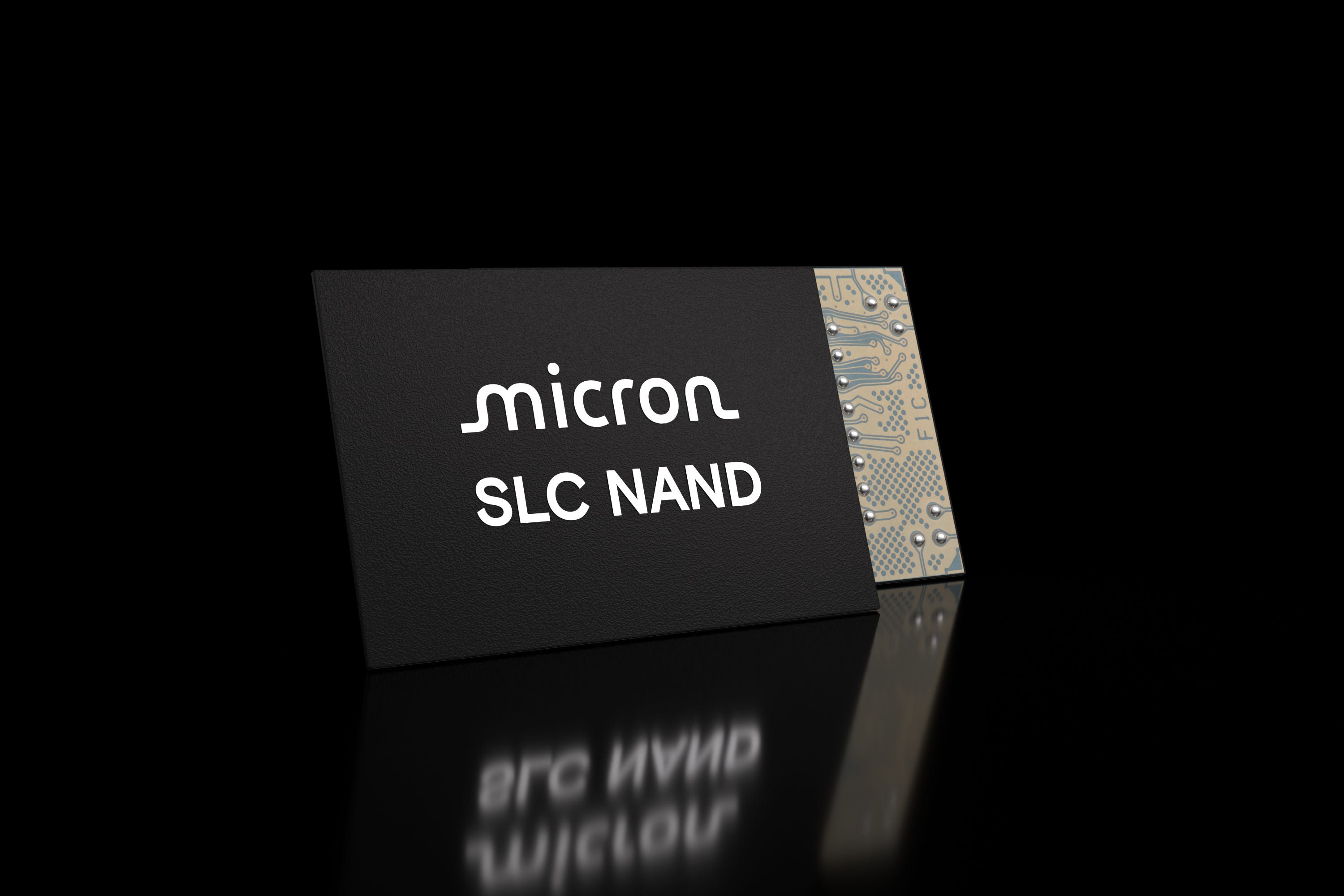
At Micron, Henderson leads strategy, roadmap, business development, and customer relationships for the Industrial Segment. Aerospace, Micron’s newest portfolio, sits under Henderson’s area of primary responsibility. Chip Briefing first reported on the launch of the portfolio and its initial product, a space-qualified NAND chip, on Monday.

This interview has been edited for length and clarity.
Micron launched a radiation-tolerant, space-qualified NAND flash chip recently. Could you help me understand what it is and why it’s important?
Components that go into space get exposed to different environmental conditions than terrestrially here on Earth. As a memory manufacturer, we make products that are tuned for different environments. Even a commercial environment that your phone sits in, it has certain specifications; an industrial product that is in a harsher machine environment can have different specifications.
So, we tune the quality and performance of memories around things like temperature and quality and reliability towards the environments that they sit in, to make sure that they operate well and operate safely. And so, space is another environment and has a radiation exposure component to it.
So, the biggest thing you’re thinking about when you’re designing this chip is radiation. Are there other challenges that space poses?
Radiation is probably the largest one that most [companies] design around. If there was a number one, that’s the number one.
Quality and reliability is the second one. Quality and reliability means, will the product work the way we said it would. This is even more critical in space, because if you think about the cost and effort of what gets put in space, it’s a pretty costly endeavor. What you make that sits in space is a costly line item, and so the highest quality components, as well as a tolerance of the radiation, tend to be the two that are most critical.
And one of the cool things about the products that we make are, there’s no spinning parts. If you think about memory from the way it used to be a long time ago, it was a disk drive that spins around. You can imagine, in a vibration environment, that wouldn’t do very well. So, we make products that are solid state in nature. No moving parts.
I’d like to dig deeper into why radiation poses a challenge. My layman’s understanding is that a semiconductor is composed of very, very fine parts, and radiation is like throwing baseballs at these very fine parts.
Yup, that’s a great way to think of it. What I would say is the intensity of the baseball that gets thrown on Earth – to use your analogy – the intensity of the impact gets higher as you go into space. And so, that’s why there’s a need and a desire to make sure that there’s a good understanding of how capable a product is of performing when it’s under that environment.
Can you paint me a picture of what it looks like to have space qualified memory out there?
Computation in space is like computation on Earth. There’s a processor and some RAM and some storage that do something depending on the mission. It can be anything: guidance of a satellite that is moving, the recording of information that comes from a test that’s being performed, providing us connectivity in remote regions.
One example is the EMIT (NASA’s Earth Surface Mineral Dust Source Investigation) mission. There’s a study that’s ongoing to collect information around dust particles and how they affect our atmosphere. What’s computationally happening there is that sensors are evaluating dust levels, comparing it against weather patterns and other environmental impacts on Earth, and then the actual storing of the information of dust particle levels is happening in space. It’s getting stored on an SSD that’s made with our product and it’s being held and captured over time.
Now you can’t just transmit in space to the internet and store to the cloud, the way that you can here on Earth, because that infrastructure is not there. And the transmission time, depending on where you might be on the rotation of the orbit, may not have direct line of sight to transmission point. So, there are additional considerations that need to be made.
Can you talk me through the process of how this project got started in the first place? How long did it take? When did R&D begin?
It’s a long time. If you want to go back to the genesis, we’ve been supplying our product from COTS (commercial off-the-shelf). It means a standard temperature product that you would put into a consumer device or an industrial device, or even automotive. We’ve been selling our really high quality COTS products into the market for a long time. We’ve been number one in the industrial market and the automotive market for about 30 years.
We’ve been selling it into the market for that amount of time, and our customers have been the ones that have had the burden to take those products, go into an aftermarket, and do some of this testing themselves. And so, we’ve been at it at the ‘excellent ingredient’ brand, for many, many years.
Within the last three or four years, our customers have turned up the dial and said, “Hey, we would like to see you [in the space industry]. What could you do to help us along the way?” And so, in the last three or four years, we have been evaluated our capabilities [in the space industry].
You said customers used to take Micron chips and then do their own testing and their own modifications afterwards. There’s been computers in space for many decades now. What existed before Micron’s recent space-qualified chip?
Before Micron began offering this product, the requirements to understand the silicon was left on the end market. And that’s tricky, because semiconductor manufacturing is a complex activity. We’re able to do this [testing] at a strong level and can provide that service to our customers, so that they can go focus on what they do well, right?
If you think about someone who has a mission to, let’s say, put a satellite in space, their primary engineering and purpose is satellite. What makes a satellite go well? What is its purpose? How long do we need it to be there? How far does it need to be from the next satellite? Whatever the mission of that satellite is, that’s their primary focus.
In the past, they’ve had to go and spend some of their resources doing chip level qualifications on how a chip performs and step through the very iterative process that can take a really long time. Getting in line for a radiation beam that you can perform tests with is a very lengthy process.
So, in the past, the burden was left on our customers to take the commercial products and go and do it themselves. Now Micron has enabled a data sheet with that information already there. They get to get that step, and they get to just start from the design phase, where they know what the problem is.
What other products might we expect from Micron’s new space portfolio and what timeline might we expect?
The functions that get performed in space are very computational. If you think about the core chips that [a computer in space] requires to do computation, there is logic, there is memory and there is storage.
We have released our first product, which is a storage product. We have intentions to release another storage product that’s – instead of single level cell NAND – it’ll be a triple level cell NAND, which will enable some higher density solutions. And then we also have plans to release memory products, RAM products, the volatile products that provide bandwidth during the computation. We also have one more, which is a non-volatile product. It’s a smaller density called NOR, but it’s very reliable and is generally used for booting as well.
They’re on a roadmap to be executed in the next couple of years.
Where is Micron manufacturing and packaging these chips?
Micron has a strong network across the whole world. This product is fabbed in Manassas, Virginia. It’s made from our factory there that has been strongly supporting some of our legacy lines, as well as moving into some more advanced lines. It’s been pointed at customers that require longevity, like automotive, like industrial, like networking. That factory has been putting out very high quality products for many, many years. And so, this product is made there.

As a last question: I understand the space-qualified NAND is part of a broader aerospace and defense portfolio, which is part of the broader Embedded Business Unit. How significant is this portfolio, and do you expect the aerospace and defense portfolio to grow?
Yes, it is important. We definitely view it as a strong growth trend. If you look at what’s happening in the space economy, the trajectory of commercializing space is a ‘up and to the right’ trend. We definitely view this as a growing market, a growing trend, and really only limited by the creativity of people.